It’s World Cup season, and it keeps delivering: dubious referee decisions, fans marching the streets celebrating and sometimes disrupting opposing teams’ sleep and, of course, underdogs standing their ground against the great football nations’ teams. The Norwegian team beat the excellent Brazilian team, Cape Verde’s team put up a tremendous fight against the world champion Argentina, and, of course, the Nationalmannschaft lost the penalty shootout against the team from Paraguay.
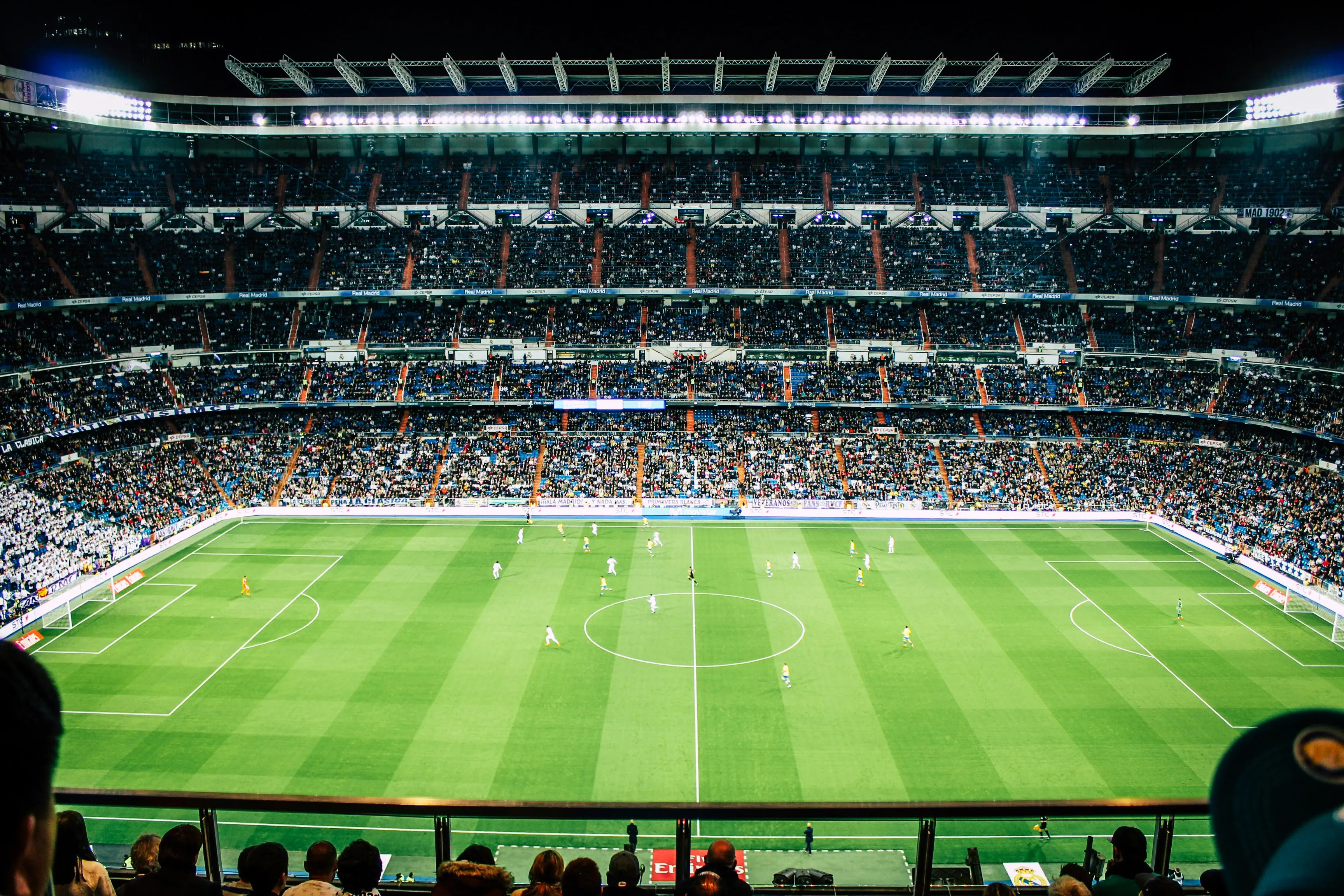
This was bad news for coach Julian Nagelsmann, who was fired just a couple of days later. Because if the 2014 world champion loses against the 22nd team in the world, clearly the coaching was below par, right?
Unfair Tournament Format#
The world’s best chess player, Magnus Carlsen, famously stepped down from the FIDE world championship in 2023. Among other points of criticism, Carlsen stated in an interview that he found the competition’s format inadequate:
So I think 12 games, or now 14 games, that there is for the world championship is a fairly low sample size. If you want to determine who the best player is, or at least the best player in that particular matchup, you need more games. And I think, to some extent, if you’re going to have a world champion and call him the best player, you’ve got to make sure that the format increases the chance of finding the best player. So I think having more games, and if you’re gonna have a lot more games, then you need to decrease the time control of it, […]
But where does his criticism of small sample size come from? In the 2018 World Chess Championship, Carlsen, rated 2835 at the time, fought a war of attrition against his challenger, Fabiano Caruana, rated 2832. After 12 consecutive draws, it was in the tiebreaks that Carlsen beat his opponent 3-0 and was declared world champion following 50 hours of play and over 750 moves.
Using their Elo ratings and the formula for calculating the expected outcome of one game
we see that the expected outcome is pretty much a draw, with a .4% edge for Carlsen.
But what are the odds that there is no clear winner over the course of a 12-game match? Let’s simulate 100,000 matches between Caruana and Carlsen and find out where Carlsen’s opinion comes from.
So even after 12 games, Carlsen’s chance of winning the competition was a mere 40%. Had they played 200 games instead, his chances of winning would have grown to about 52%.
Back to Football#
eloratings.net maintains a list of world football Elo ratings that allow us to estimate outcomes at the World Cup1. The German team is rated 1932, and Paraguay 1834. We can reuse the chess formula:
They played a single match, and the Nationalmannschaft had a 64% probability of winning it. You may share my opinion that this matches how the match went – the German team mostly dominating. However, about one in three times, Paraguay is expected to win. This was one of those times.
What if Germany and Paraguay played a FIDE-style world championship match though?
The 100-point Elo gap really shows itself, leaving the team from Paraguay with a slim 10% chance of walking away victorious after 12 games. Still far from impossible, around the same chance as guessing three coin flips in a row. But way closer to the real teams’ abilities.
Winning the World Cup is About Luck#
“Aren’t you rationalizing a bit too hard just because your team lost at football?,” my dear reader may ask. Maybe I am. But I’m not that big a football guy. I’m a data-guy, and what drives me mad is some German media calling the loss a “disgrace” (Bild) or “humiliation” (Sportschau), although the odds of losing were one out of three all along. You might find yourself disgraced and humiliated quite frequently if this is your bar, no?
A more honest opinion could have stated that the team’s performance under Nagelsmann has been sub-par, and that the World Cup performance verified this. But any criticism was barely noticeable before the World Cup, making the whole discourse feel hollow.
Winning at the World Cup requires a ton of luck, and this becomes especially evident once a team reaches the knockout stage.
Let’s explore this with another simulation. I’m taking the actual round-of-32 bracket and each team’s Elo rating at World Cup kickoff. The widget below simulates the entire knockout stage and derives each team’s chance of walking away with the trophy.
Even the dominating teams from Spain and Argentina only have a 25% chance each of winning the cup. Luck hits hardest in the bracket from 1900-2000 Elo. Run the simulation a couple of times to see the rankings change.
Or take another visualization: Hit the button below and find out who takes home the trophy in a single simulated World Cup, starting at the 2026 round of 32.
So what’s the take-away? Is the World Cup an unfair tournament by design? Well, I guess it is. The knockout phase sure is a crappy format for determining the best team. However, the World Cup is also about the drama, heroic wins and bitter downfalls that people all over the world enjoy obsessing over.
Footnotes#
-
I used the 2026 World Cup starting ratings for all calculations: https://www.eloratings.net/2026_World_Cup_start ↩